How Dust Collection Systems Improve Industrial Air Quality and Workplace Safety
Industrial facilities generate dust during processes such as cutting, grinding, polishing, mixing, crushing, material transfer, woodworking, metal fabrication, and packaging. When this dust is not controlled properly, it can spread across the workplace, affect indoor air quality, settle on machinery, create housekeeping problems, and expose employees to airborne contaminants.
This is why dust collection systems have become an important part of modern industrial environments.
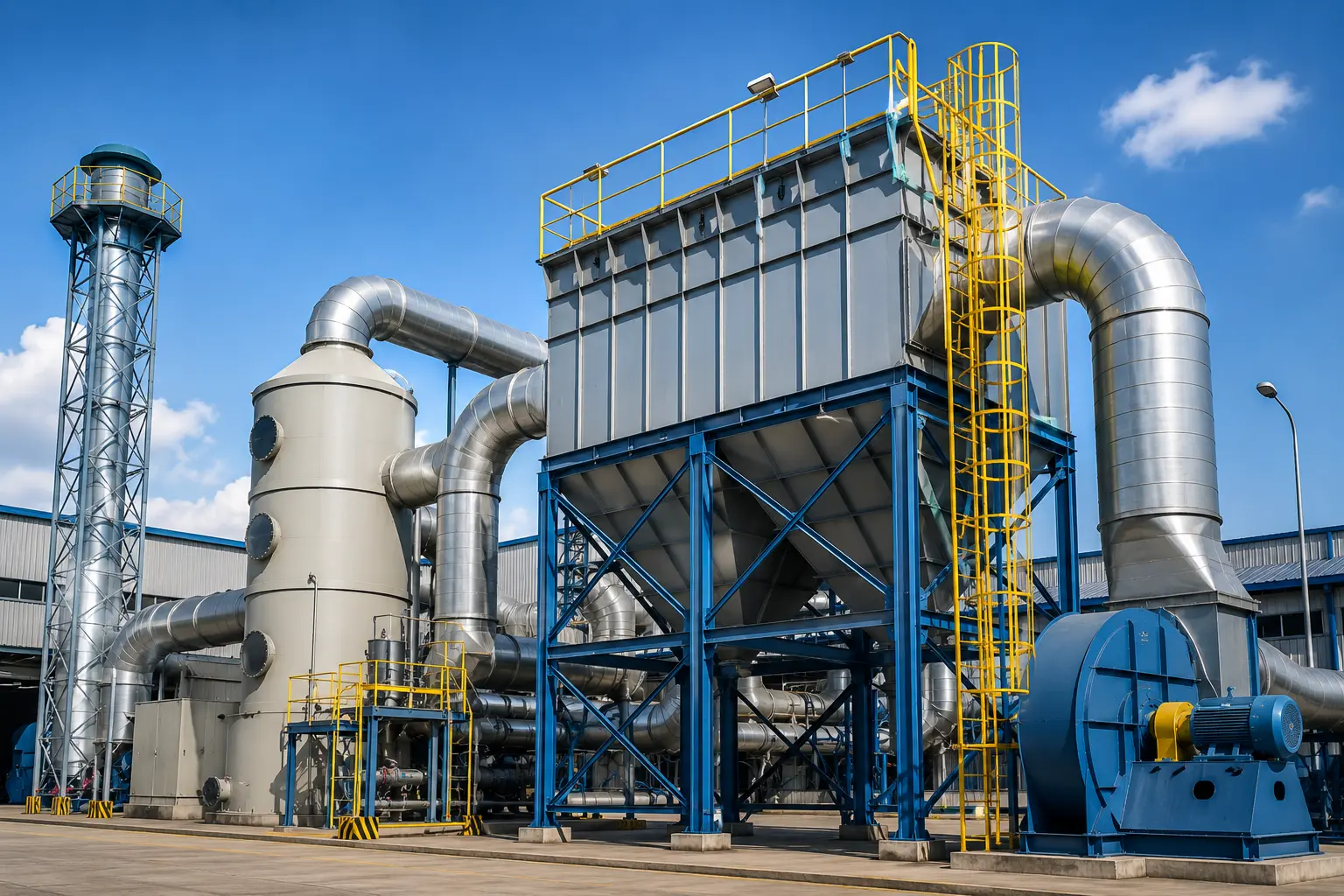
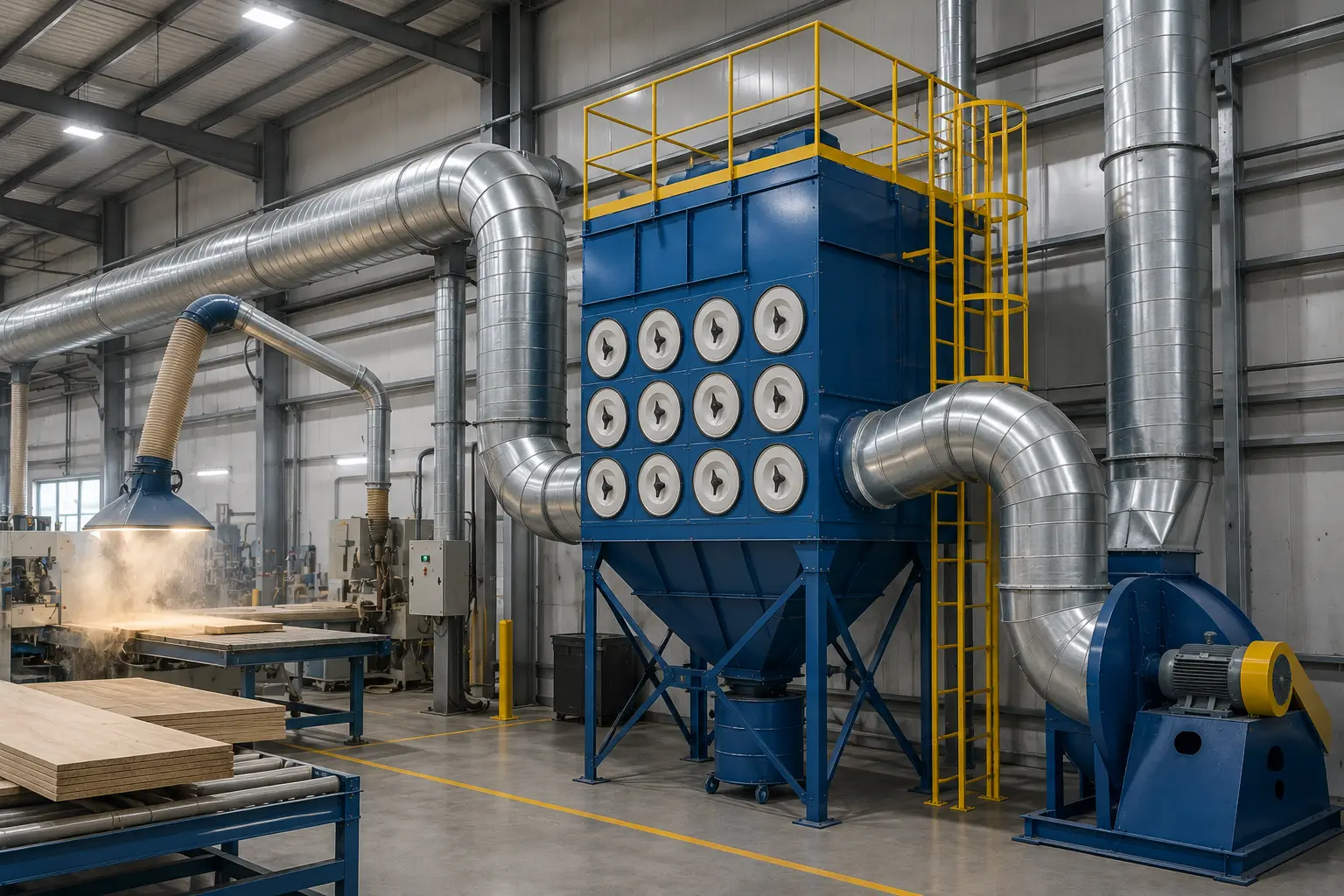
A properly designed industrial dust collection system captures airborne dust close to its source, transports contaminated air through ductwork, separates dust particles using filtration technology, and releases cleaner air according to the system design.
For industries, effective dust control is not only about cleanliness. It can also support workplace safety, operational reliability, employee comfort, equipment protection, and environmental responsibility.
What Is an Industrial Dust Collection System?
An industrial dust collection system is an air pollution control solution designed to capture and remove dust particles generated during manufacturing and industrial operations.
A typical system may include:
- Dust capture hoods
- Extraction points
- Ductwork
- Industrial blowers or fans
- Filter bags or cartridges
- Dust collection chambers
- Dust discharge mechanisms
- Control panels
The main purpose is to stop dust from spreading throughout the facility.
Instead of allowing airborne particles to move freely through the workplace, the system captures them at or near the source and directs them toward filtration equipment.
Why Industrial Dust Control Is Important
Dust may appear harmless in small quantities, but continuous industrial dust generation can create several operational and safety concerns.
Facilities that do not control dust effectively may experience:
- Poor indoor air quality
- Reduced visibility
- Dust accumulation
- Increased cleaning requirements
- Equipment contamination
- Worker discomfort
- Higher maintenance requirements
- Product contamination
- Workplace safety risks
The type and level of risk depend on the material being processed and the concentration of airborne particles.
An effective industrial dust collection system helps businesses control these risks more systematically.
How Dust Collection Systems Improve Industrial Air Quality
One of the primary benefits of dust collection equipment is improved air quality.
Captures Dust at the Source
The most effective way to control industrial dust is to capture it before it spreads.
Dust collection hoods and extraction points are positioned near processes where dust is generated.
These may include:
- Grinding stations
- Cutting machines
- Mixing units
- Transfer points
- Loading stations
- Production lines
Source capture limits the amount of dust that enters the general workplace environment.
Removes Fine Airborne Particles
Some industrial processes generate very small dust particles that remain suspended in the air.
These particles can move beyond the immediate production area and settle throughout the facility.
Bag filters and cartridge dust collectors are designed to capture airborne particles from contaminated airflow.
This improves overall industrial air quality and reduces visible dust in production areas.
Supports Better Ventilation
Dust collection systems often work as part of a broader industrial ventilation strategy.
By extracting contaminated air from specific work areas, they help maintain cleaner airflow inside production environments.
Proper ventilation and filtration together create a more controlled working atmosphere.
How Dust Collection Systems Improve Workplace Safety
Dust control can play an important role in industrial workplace safety.
Reduces Employee Exposure to Airborne Dust
Employees working near dust-generating operations may inhale airborne particles if extraction is inadequate.
An efficient dust extraction system captures contaminants before they spread into breathing zones.
This can help reduce unnecessary worker exposure and support healthier workplace conditions.
Improves Workplace Visibility
Heavy dust generation can sometimes reduce visibility around machines and production lines.
Better dust extraction helps maintain clearer working environments, allowing employees to operate more comfortably and safely.
Reduces Dust Accumulation
Dust can settle on:
- Floors
- Beams
- Machines
- Electrical equipment
- Workstations
- Storage areas
Large amounts of accumulated dust can create housekeeping and operational safety concerns.
Continuous dust collection helps reduce this accumulation.
Helps Maintain Cleaner Working Areas
Cleaner industrial areas are generally easier to inspect, maintain, and operate.
Workers can identify leaks, damaged equipment, or other operational issues more easily when machines and floors are not covered with excessive dust.
Common Types of Industrial Dust Collection Systems
Different industrial environments require different dust collection technologies.
Bag Filter Dust Collectors
Bag filter systems use fabric filter bags to separate dust particles from contaminated air.
Dust accumulates on the surface of the filter media while cleaner air passes through.
They are commonly used in facilities with continuous dust generation and high dust loads.
Cartridge Dust Collectors
Cartridge collectors use pleated filter cartridges with a large filtration surface area.
These systems are often suitable for fine dust applications and facilities where compact equipment design is important.
Cyclone Dust Collectors
Cyclone separators use centrifugal force to separate larger dust particles from an air stream.
They are often installed as pre-separators before finer filtration systems.
This helps reduce the amount of heavy dust reaching the main filter.
Wet Dust Collection Systems
Wet systems use water or another liquid to capture certain types of dust.
They may be used in specific applications where wet collection is technically suitable for the material and process involved.
Industries That Benefit From Dust Collection Systems
Dust collection systems are used across a wide range of industries.
Common applications include:
- Metal fabrication
- Automotive manufacturing
- Cement
- Construction materials
- Pharmaceuticals
- Food processing
- Woodworking
- Furniture manufacturing
- Chemical processing
- Foundries
- Engineering
- Packaging
- Powder processing
- Plastic manufacturing
- Mining and mineral processing
The type of system required depends on the characteristics of the dust and the production process.
How Dust Collectors Protect Industrial Equipment
Dust does not only affect people. It can also affect machines.
Industrial dust can enter:
- Motors
- Bearings
- Electrical panels
- Sensors
- Control systems
- Moving components
Over time, contamination may contribute to overheating, increased wear, and maintenance problems.
A well-designed dust extraction system reduces the amount of airborne material settling on machinery.
This can support:
- Cleaner equipment
- Better machine reliability
- Reduced maintenance
- Longer component life
- Improved production consistency
For facilities using expensive machinery, equipment protection is an important additional benefit of proper dust control.
Dust Collection and Product Quality
In certain industries, airborne dust may affect product quality.
This is particularly important in sectors such as:
- Food processing
- Pharmaceuticals
- Electronics
- Precision manufacturing
- Packaging
Dust can settle on materials, production surfaces, and finished products.
Effective industrial air filtration helps maintain cleaner production conditions and can reduce contamination risks.
Improving Productivity Through Better Dust Control
Poor dust management can affect productivity in several ways.
Employees may need to spend more time cleaning work areas, machines may require more frequent maintenance, and production may be interrupted because of excessive dust buildup.
An efficient dust collection system can reduce these problems.
Businesses may benefit from:
- Reduced housekeeping time
- Fewer dust-related interruptions
- Improved machine performance
- Cleaner production areas
- Better employee comfort
- More organized workspaces
These improvements can contribute to smoother day-to-day operations.
Key Factors When Choosing a Dust Collection System
Selecting the right system requires more than choosing a dust collector based on size.
Several technical factors should be considered.
Type of Dust
Understand what type of material is being collected.
Dust from wood, metal, cement, chemicals, food products, or powder processing may have different properties.
Dust Particle Size
Fine dust may require higher-efficiency filtration compared with larger particles.
Airflow Requirement
The system must provide sufficient airflow to capture dust at its source.
Proper airflow calculations are essential for effective extraction.
Dust Concentration
Processes producing high volumes of dust may require larger collectors or pre-separation systems.
Operating Temperature
High-temperature processes may require specialized filters and system components.
Facility Layout
Duct routing, available installation space, machine position, and extraction-point locations should be evaluated carefully.
Importance of Proper Dust Collection System Design
Even high-quality dust collection equipment may not perform effectively if the system is poorly designed.
Proper engineering should consider:
- Capture velocity
- Hood design
- Duct diameter
- Airflow balance
- Fan capacity
- Filter selection
- Dust discharge
- Pressure drop
- Equipment layout
For example, if the extraction hood is positioned too far away from the dust source, the system may fail to capture airborne particles efficiently.
This is why industrial dust control solutions should be designed around actual plant conditions.
Maintenance of Industrial Dust Collection Systems
Regular maintenance is essential for consistent performance.
Important maintenance activities include:
- Inspecting filters
- Checking filter pressure
- Cleaning or replacing filter elements
- Inspecting ductwork
- Checking dust discharge systems
- Monitoring fan performance
- Inspecting electrical controls
- Checking seals and connections
Blocked filters or leaking ducts can reduce extraction performance and increase energy consumption.
A preventive maintenance schedule helps keep the system operating efficiently.
Frequently Asked Questions
What is the main purpose of a dust collection system?
A dust collection system captures airborne dust generated during industrial processes, filters contaminated air, and helps prevent dust from spreading throughout the workplace.
How does a dust collector improve air quality?
It extracts dust-containing air from production areas and passes it through filtration equipment, reducing the concentration of airborne particles.
Can dust collection systems improve workplace safety?
Yes. They can reduce worker exposure to airborne dust, improve visibility, minimize dust accumulation, and help maintain cleaner work areas.
What type of dust collector is best for industries?
The best system depends on the type of dust, particle size, dust volume, airflow requirements, process temperature, and facility layout.
How often should dust collector filters be replaced?
Replacement frequency depends on operating conditions, dust concentration, filter type, and pressure-drop readings. Filters should be inspected regularly and maintained according to manufacturer recommendations.
What is the difference between dust collection and dust extraction?
Dust extraction focuses on capturing contaminants from their source, while a dust collection system includes the complete process of extraction, transportation, filtration, collection, and discharge.
Conclusion
Industrial dust may be a common by-product of manufacturing, but it should not be ignored.
A properly engineered dust collection system can significantly improve industrial air quality by capturing dust close to its source and preventing airborne particles from spreading throughout the facility.
The benefits go beyond cleaner air. Effective dust control can support worker safety, equipment protection, improved productivity, better housekeeping, and more reliable industrial operations.
However, the best results depend on selecting the right filtration technology, calculating airflow correctly, designing effective extraction points, and maintaining the system regularly.
Bharat Air Technologies provides industrial solutions focused on efficient air pollution control and practical operational requirements. Whether your facility needs a dust collector, dust extraction system, filtration solution, or a customized pollution control setup, selecting the right system can help create a cleaner, safer, and more productive industrial environment.
Need an effective dust collection solution for your plant? Contact Bharat Air Technologies to discuss your industrial dust control requirements and find a system designed for your specific application.
RECENT BLOGS